
Morristown City Directory Holdings
Morristown has useful historical leads, but the research did not verify a complete official city-directory run, a publisher list, a shelf location, digitized entry pages, or a readable local sample. The one specific lead is a Morristown City Directory 1926 listed by an established genealogy index. Treat it as a finding aid until the title page, image, publisher, and holding institution are checked. The table leads with what is documented and marks the gaps so a missing volume is not turned into a false claim.
| Collection | Verified years or coverage | Where to start | Access and limitation |
|---|---|---|---|
| 1926 directory lead | Morristown title reported by a genealogy finding aid | Finding aid plus Library, Archives, and TSLA inquiry | Verify image, title, publisher, and shelf location before citing; complete run is unverified |
| Reverse or criss-cross directories | Specific Morristown years not located | Library, Archives, TSLA, and Genealogical Society | Address-to-occupant follow-up; local run and sample are research gaps |
| Morristown Gazette | 1867 to 1920 title record | Library of Congress Chronicling America and local newspaper microfilm | Search OCR and issue images, then retain issue date and page |
| Hamblen deeds and plats | Records from 1860; electronic scans back to 1978 | Register of Deeds and TSLA microfilm | Online index endpoint is unverified; use counter, request, or microfilm fallback |
| Morristown city minutes | 1855 to 1996 in listed roll segments | TSLA microfilm and Hamblen County Archives | Street, ordinance, institution, and public-action context, not a household list |
| Tax books | Selected years from 1877 onward | Archives and TSLA | Historical district, owner, and acreage clues; inspect the cited roll or volume |
There is no verified basis for claiming missing-year patterns, a publication stop date, or a complete online collection. Ask for the exact title and year rather than a broad request for old directories. That makes a library or archive search much easier to answer.
Note: A collection lead becomes usable evidence only after the title, year, page, and holding source are verified.
Morristown Records Archive Routes
The Morristown-Hamblen Library confirms a key split for directory research: genealogy materials other than microfilmed newspapers moved to Hamblen County Archives. The library remains a route for newspaper microfilm, public computers, guest-pass access, and reference help. Its published contact information gives a reference and genealogy route, but the archive is the likely destination for local legal and genealogy material that is not kept on library shelves.
The screenshot from the library genealogy-layout page records the published relocation guidance that affects a historic Morristown directory search.
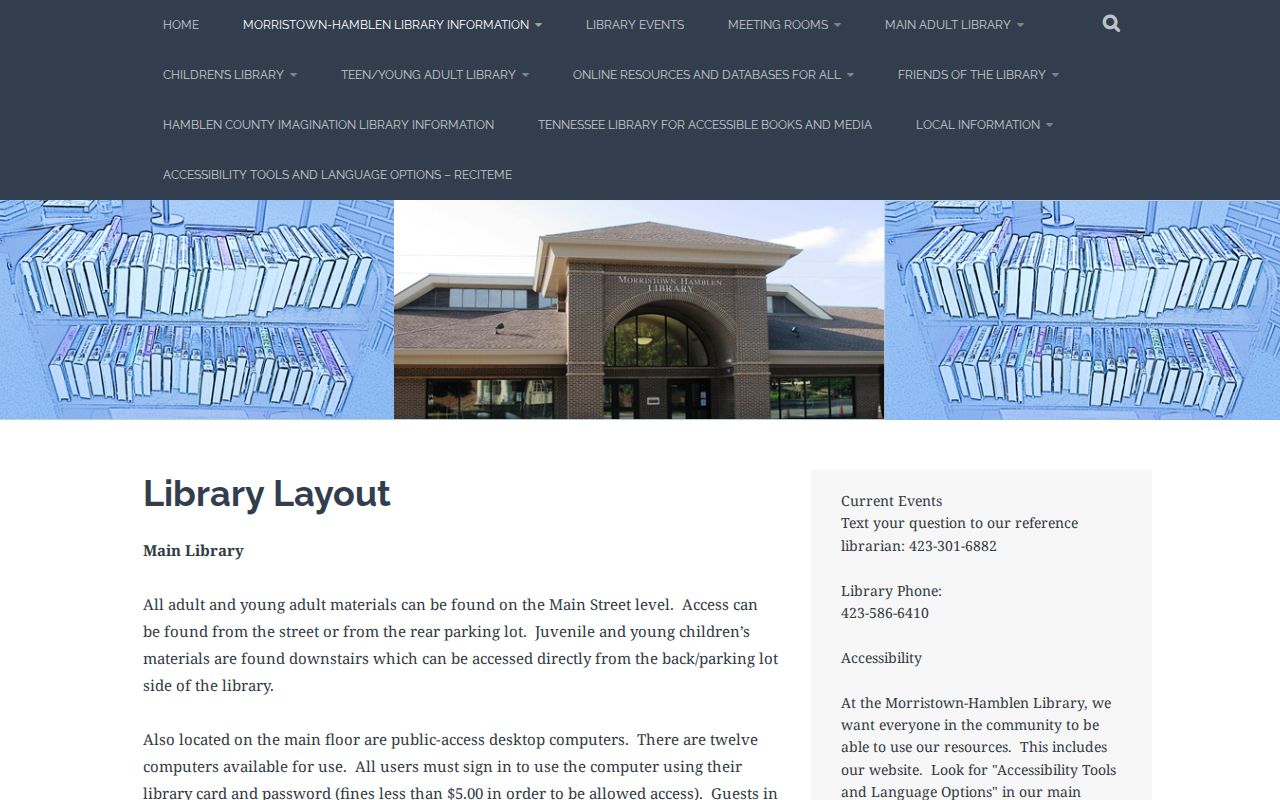
Call before visiting with the name, address, approximate years, and source type. Hamblen County Archives is at 511 W Second North Street, and the county page says to call for hours. The Genealogical Society reports Tuesday through Thursday, 9 a.m. to 3 p.m., except holidays, which is a lead to verify before travel.
Digitized Morristown Directory Leads
The available genealogy finding aid is a lead, not a verified digitized collection. It identifies a 1926 Morristown directory title along with other historical references, but the research did not expose a readable directory image, a publisher, a page, or an official complete run. Search a name, street, and alternate spelling there, then confirm any promising result with an image or a holding institution.
The image from the Morristown genealogy lead page shows the finding-aid route that should be verified before a directory entry is quoted.
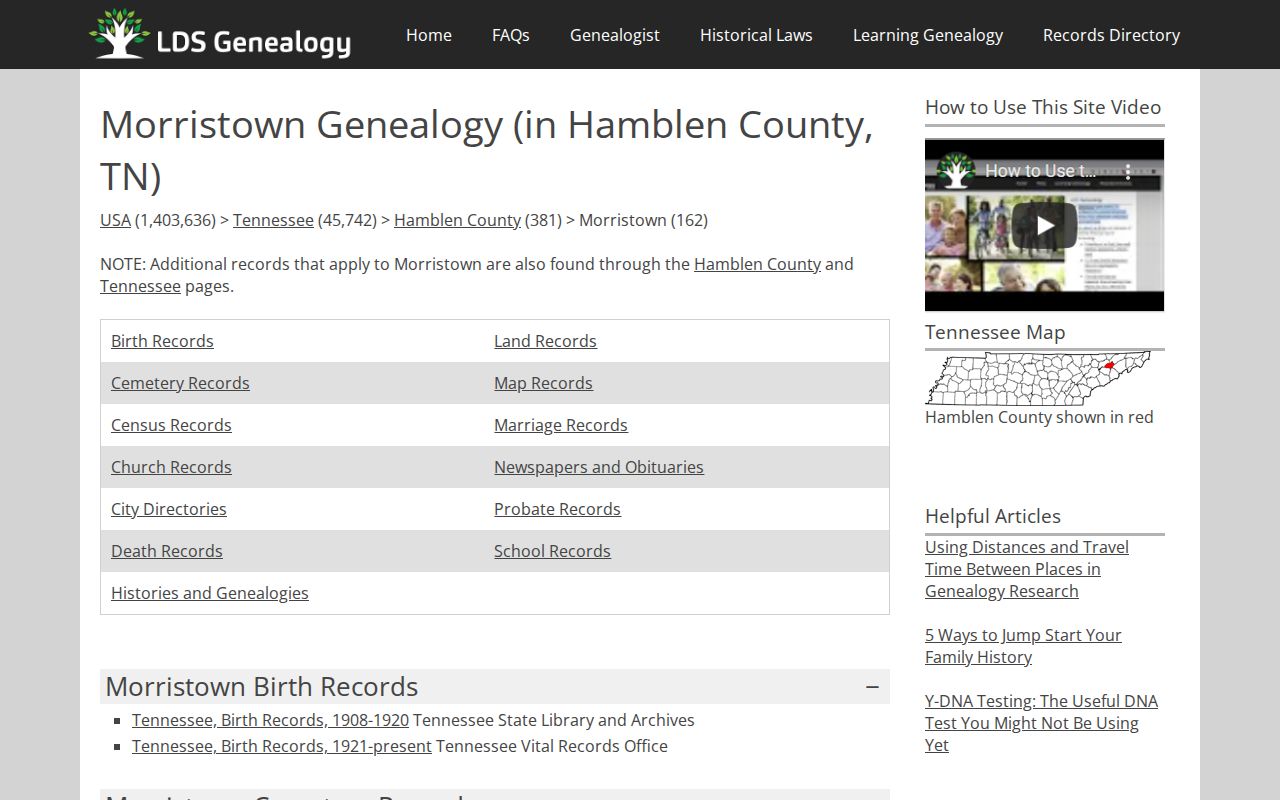
A search result without a title page and printed entry is not enough to report a household fact. Record the URL, search date, and follow-up request, then seek the image or a staff-confirmed volume.
Morristown Records Newspaper Clues
The Library of Congress record for the Morristown Gazette gives a title span of 1867 through 1920. A newspaper is not a directory volume, but it can support a dated address trail through obituaries, marriage announcements, court notices, property advertisements, business notices, church events, social columns, and municipal proceedings. Search the surname, street fragment, institution, and spelling variants. OCR can misread all of them.
Keep the issue date and page or image identifier with every newspaper lead. A newspaper mention may show a person at an address or institution on that date, but it does not establish ownership or a continuous residence.
Reading a Morristown City Directory
No readable Morristown directory entry was exposed during the research. That prevents a claim about local abbreviations, exact entry layout, publisher practice, or any printed notation. When an actual volume is located, capture the title, publisher, year, page, exact printed abbreviations, and cross-reference before interpreting a name. The inventory below is a checklist of fields to capture if they actually appear, not a reconstruction of a local entry.
| Name and relationship notation | Capture the printed name and any spouse, family, or cross-reference notation exactly as printed. No Morristown example was verified. |
|---|---|
| Business or occupation line | Capture it only if printed and preserve its abbreviations. The local field format is unverified. |
| Street address | Record the house number and street exactly, then compare it with the volume year and current address evidence. |
| Owner or occupant notation | Photograph or transcribe any printed mark with its key. No local symbol or key was inspected. |
| Telephone or widow notation | Preserve any printed notation without expanding it from another city's directory conventions. The local format is unverified. |
- Criss-cross directory
- An address-order section that may turn a street into an occupant lead. A Morristown run and sample were not verified.
- Householder index
- A name arrangement intended to identify a household or principal listing. Its inclusion and local arrangement must be checked in the volume.
- Abbreviation key
- The printed explanation for a volume's shortened terms or marks. Photograph it with the entry because it controls the interpretation.
A directory can list an occupant who was not the recorded owner, an institutional entry, or a business at an address that looks private. For that reason, pair a directory finding with a deed, tax, census, newspaper, or probate source appropriate to the question.
Morristown Directory Dates We Know
The evidence supports a small timeline, not a publication history. Each point is a research checkpoint with a named source route. The missing first publisher, last printed year, and full run remain gaps that require staff confirmation or an inspected volume.
- 1855 to 1996: TSLA lists Morristown city minutes in roll segments across this span. They can explain street names, ordinances, institutions, and public actions around an address.
- 1867 to 1920: the Library of Congress title record covers the Morristown Gazette, which provides dated news and address context.
- 1926: an established genealogy finding aid reports a Morristown city-directory title. The image, publisher, shelf location, and complete run were not verified.
- 2002 and 2005: the Archive blog describes its creation in 2002 and the later move of resources from the library's Meta Goodson Genealogy Room in 2005.
Note: A timeline point identifies a source route or date span, not proof that a particular person appears in a volume.
Trace Morristown Household Records
Use each city directory as a dated observation, not a single continuous biography. The public federal census follows a 72-year release rule, with 1950 the latest generally released schedule in this research context. Deeds, tax books, city minutes, newspapers, probate, marriage indexes, and historical directory leads can bridge the long intervals between census years. A household may disappear because of a move, death, a name variation, an institutional listing, or incomplete coverage. The next source should test those possibilities rather than assume one.
- Start with a verified entry or lead. Record the source title, year, page, spelling, address, and every exact notation before copying a name into a timeline.
- Search forward and backward. Test initials, middle names, married surnames, alternate spellings, street fragments, and the city and county labels separately.
- Pair the source with a census snapshot. Check the decennial household, age, relationship, and geography against the directory date, while preserving the release and coverage limits.
- Test the address through land records. Use TPAD for a parcel clue and the Register of Deeds for the recorded land trail. A modern owner display does not identify every historical occupant.
- Close with dated local evidence. Search the Gazette, tax books, probate, city minutes, Archives, or FamilySearch as the source fits the years and question.
If the goal shifts to current address-keyed property records, use the Morristown street directory route instead of treating historical directory material as current evidence.
Note: A directory entry captures one published moment, so a later address or household source should be compared rather than presumed identical.
Morristown Address Record Minutes
Morristown city minutes can explain why an older directory street does not fit a current map. TSLA's Hamblen microfilm inventory lists minutes in successive segments from April 1855 through February 1996 and ordinances from April 1894 through August 1991. These records can supply a dated lead about a street opening, naming issue, municipal improvement, institution, or public action. They do not prove a current parcel owner or a continuous household.
Ask Hamblen County Archives or TSLA for the roll and date range rather than a broad search. The archive preserves non-circulating local legal and historical material, and the roll number is a practical search instruction. Compare any minute reference with an addressing record, plat, newspaper page, or directory volume before resolving an address.
Note: City minutes can explain a public street action, but they do not by themselves identify a current resident or owner.
Morristown Society Record Route
The Hamblen County Tennessee Genealogical Society is a local referral point for publications, local-records leads, and archive research. Its described pictorial county history contains family narratives, schools, businesses, churches, photographs, articles, and a surname index. That kind of publication can suggest names and places, but it is not a substitute for the title page and entry of a historic Morristown directory.
The screenshot from the Genealogical Society page documents the local research referral source.
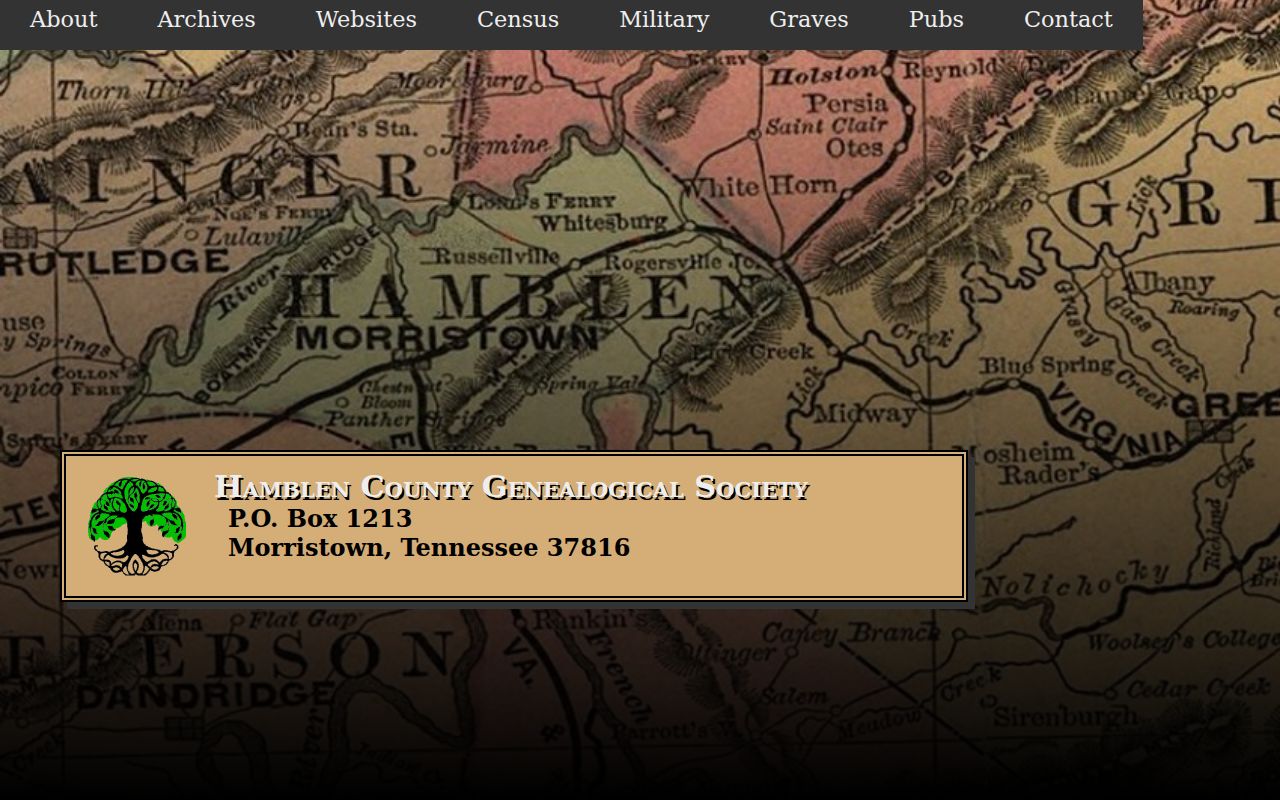
Use the society to ask whether a specific year, title, roll, publication, or archive box is known. Verify meeting schedules, collection locations, and access rules before relying on them for a visit.
Morristown Missing Directory Leads
Myth. A missing directory result does not establish that a person was absent from Morristown. The source may have incomplete coverage, an unreadable OCR layer, a spelling change, a business or institution entry, or an unverified volume gap. The National Archives 1930 city-directory guide does not list Morristown, but that absence is a coverage check, not proof that no local directory existed.
Log the exact title searched, year, spelling, page range, and whether the search was an index, image, microfilm roll, or staff inquiry. That record makes the next archive request far more useful than a general no-result statement.
Morristown Historical Directory Boundaries
City-directory material is historical context, not a complete modern registry. The research found no official complete Morristown run, no verified local reverse-directory sample, and no readable local entry to establish exact printed fields. A record can be indexed under Morristown, Hamblen County, a historic community, a postal place, a parcel, or an institution. Record the source date and geography every time.
Use public records with care. Tennessee protected-address handling, restricted vital records, sealed files, and private organization rosters cannot be treated as ordinary directory material. A historical lead should point back to the correct custodian, not be expanded into a profile of a living person.